CGP

Case studies & testimonials

Better growth decisions.
Results you can see.

More spending is not always the answer. Explore how clearer priorities, better coordination and focused execution changed the outcome.

Returned to growth

Within 18 months after losing 20% of the business.

2× leads

In months two and three after a website hack, compared with the months before it.

$42,000/yr

Saved by replacing an expensive SEO program.

Featured case / Marketing spending

The owner feared losing customers.
The opportunity was to stop overspending.

After 18 months of SEO spending, an owner wanted to know what the program was delivering and whether it was safe to change providers.

CGP compared delivery with commitments, found execution gaps and identified useful research to preserve. A focused replacement put that research into action at a lower cost.

$42,000

Annual reduction in comparable SEO spending.

From $4,000 per month to $500 per month.

A client’s perspective

“Tony helped us bring focus and structure to our marketing and growth strategy. Rather than recommending more marketing or expensive agencies, he helped us build a lean, targeted program aligned with our business priorities and budget. His approach has delivered real results, including greater digital credibility and inbound inquiries from companies discovering us through search and AI.”

Kevin O’BrienEVP Business Development, The Integritus Group

More client work

Find a situation like yours.

Choose a case to explore the situation, the work and what changed.

Product traction / Specialty ingredients

A product the team struggled to sell. A clearer reason to buy.

An ingredients supplier had a blend that was not gaining traction. CGP examined the product’s role, target buyers, economics and sales approach to understand what needed to change.

A clearer product role, target customer and route to market.

Growth strategy

Recovering lost business. Rebuilding growth.

A rejected plan and the loss of a customer representing 20% of the business called for a different go-to-market approach.

Returned to growth within 18 months; 3× target growth within two years.

Website & search recovery

Doubled leads after a website hack.

An attorney’s website was compromised and Google Ads stopped working. CGP coordinated cleanup and ongoing search support.

Leads doubled in months two and three after the hack, compared with the months before it.

Leadership & spending

A shared direction. $100,000 in annual savings.

Two generations of leadership needed a common way to prioritize projects and move important work forward.

Alignment work led to follow-on spending analysis and implemented annual savings.

Innovation & investment

Test the opportunity before the next investment.

A product had reached the market without adequately meeting customer needs. The business needed stronger commercial validation.

A repeatable process for testing assumptions and evaluating commercialization options.

Market entry

Turn a year of exploration into a clearer decision.

A new product line looked promising, but costs, positioning and supplier reliability remained unclear.

A practical go/no-go framework, validated supplier options and defined next steps.

Clients & colleagues

Expertise. Communication. Follow-through.

“The level of expertise and professionalism that Tony brought to the project was as good as I’ve seen in 21+ years working in digital marketing and infrastructure.”

Edward FosterPrincipal, Precision Digital

“His unique approach sits right in the middle of being process-oriented and being people-oriented, so he has a great way of communicating complex and foreign ideas through simple and familiar terms.”

Andrew DigiacomoOwner, Bluefire Marketing
Read more client and colleague perspectives
Aligning teams around a commercial strategyMihai ManitiuHead of Strategic Marketing and New Business Development at BASF

“During a strategic engagement in BASF’s lubricants business, Tony helped a cross-functional team align behind a common commercial strategy.

The work extended beyond marketing campaigns. It included maximizing resources, developing account-based marketing plans, establishing service-level agreements, reassessing long-running R&D initiatives, and helping sales teams evaluate the strength of strategic customer relationships.

The engagement brought approximately 15+ managers into alignment around the strategy, including difficult decisions about where the organization should no longer invest.”

“Tony combines sharp strategic thinking with real discipline: clear direction, honest communication, and follow-through on every commitment.”

Turning ideas into stronger client deliverablesSeth SnyderConsulting Director

“One of Tony’s notable strengths is his talent for helping our teams fully develop and refine their ideas. He skillfully applies frameworks that take our deliverables to new heights, consistently surpassing our client’s expectations.”

Keeping teams positive through challengesClaus JacobsVice President of Business Management, BASF

“Tony’s optimism in the face of challenge is infectious with teams.”

Helping teams solve difficult problemsConsulting Partner

“Tony helps teams rise above the fray to solve problems.”

Helping colleagues learn and contributeTeam Member

“Tony is kind and understanding. And most importantly, he showed me the inside ropes, gave me tutorials on internal resources I could tap into.”
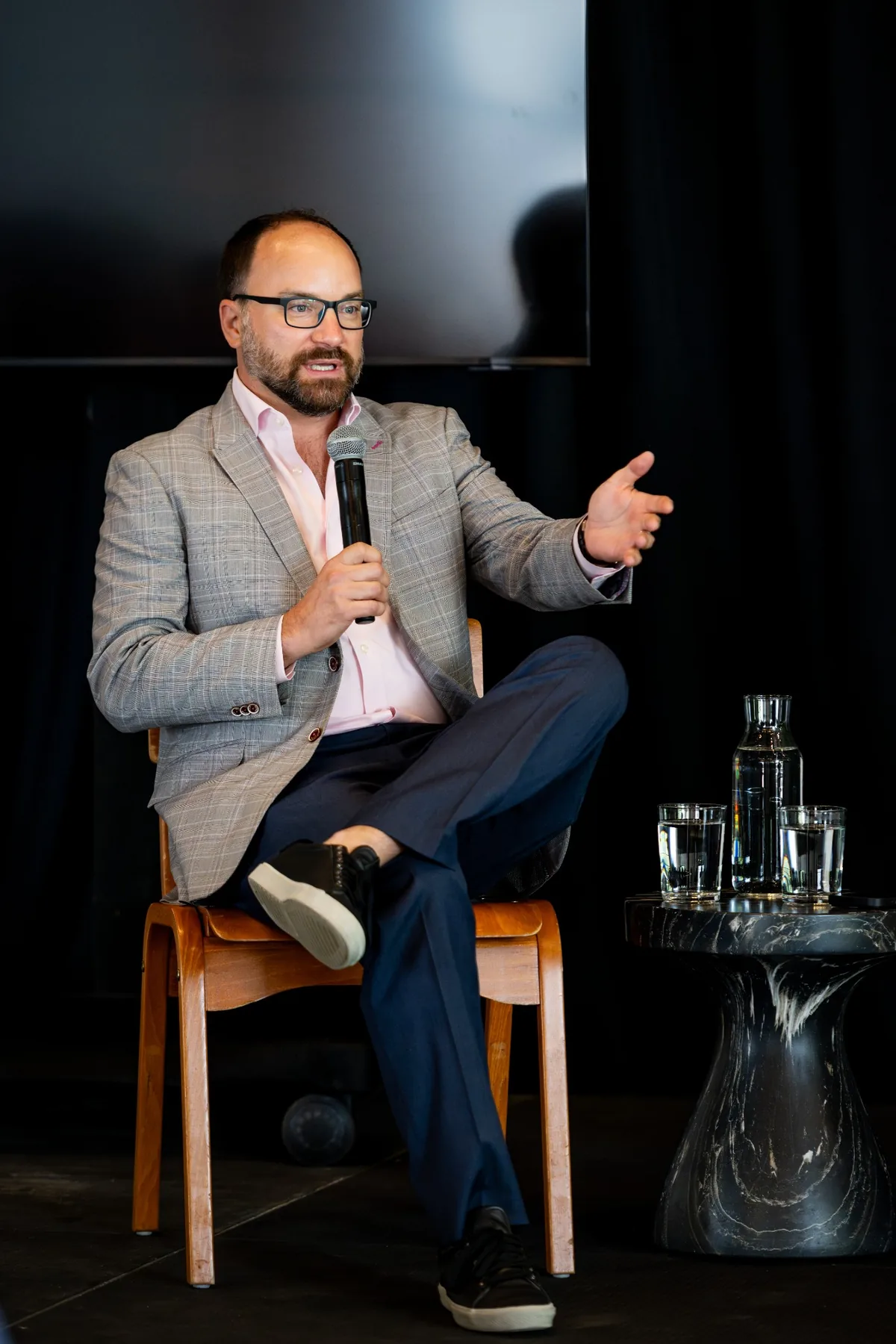
Tony Simas speaking into a microphone during a panel discussion

Speaking / Anchor presentations

Help your audience put the ideas to work.

An anchor presentation connects conference learning to the leadership conversations, priorities and practical steps needed to get change adopted.

At HCPA’s New Horizons 2025 conference, Tony shared tools to help R&D and marketing leaders bring ideas about AI, sustainability and innovation back into their organizations.

“Tony has a great stage presence”

Marc ReichelPresident, Qnary
Discuss your event

What growth decision is in front of your team?

Discuss Your Growth Priorities

Full case study

Why wasn’t the product gaining traction?

THE SITUATION

A specialty ingredients supplier had a blend that customers were not adopting and the sales team struggled to position. Pricing was a recurring objection, but it was unclear whether the real problem was cost, customer fit or the product’s value proposition.

THE WORK

CGP reviewed product and cost information, held five internal working discussions and gathered written sales input. We tested the price objections against cost-in-use and production economics, then examined who would value the blend and when they would consider it.

The diagnosis went beyond price: the product lacked a distinct job, competed with the supplier’s own individual ingredients and was being pitched to purchasing contacts after key formulation decisions had already been made.

We recommended a simpler offer with a clearer formulation use case, targeting innovation and R&D contacts earlier in development. We also outlined alternative routes through co-packers and brokers.

WHAT CHANGED

  • The team gained a clearer explanation of the commercial barriers, including why discounting alone would not address them.
  • Cost analysis challenged assumptions about the product’s affordability and the economics of future production.
  • Leadership received specific recommendations on positioning, target buyers and sales channels.

Full case study

Aligning leadership, then uncovering $100,000 in annual savings.

THE SITUATION

A food and beverage manufacturer was navigating a generational leadership transition. The CEO and COO brought different decision-making styles to project prioritization: one relied on decades of experience and intuition, while the other wanted a more structured basis for evaluating the work.

The team needed shared visibility into its projects and a way to agree on what should happen next.

THE WORK

  • Make the decision styles explicit. A Jump Start Workshop helped both leaders understand how their perspectives could complement each other.
  • Create a shared prioritization structure. The work established a common basis for discussing project priorities and resource decisions.
  • Make the work visible. Project transparency and defined next steps helped surface gaps and reduce uncertainty about how initiatives would move forward.
  • Extend the engagement to spending decisions. The client commissioned follow-on analysis of indirect spending after the workshop.

WHAT CHANGED

  • The leadership team established stronger alignment and a clearer way to prioritize projects.
  • The follow-on spending analysis identified and implemented $100,000 in annual savings within the first few months.

Full case study

Recovering lost business and achieving 3× target growth.

THE SITUATION

An industrial company had lost a major customer representing 20% of its business. Its go-to-market plan had been rejected by the board, and sales needed a new path to growth.

A restructuring had removed middle management. Expertise was siloed, and newer employees struggled to contribute alongside more tenured colleagues.

THE WORK

  • Diagnose the alignment gaps. The assessment examined siloed knowledge, unclear collaboration and gaps in service-level agreements across market segments.
  • Test the strength of customer relationships. Relationship mapping challenged sales teams’ assumptions about their influence and identified the people who mattered in customer decisions.
  • Connect the portfolio to commercial priorities. The work combined qualitative and quantitative evaluation to help the team assess projects and resource commitments.
  • Reassess the path to market. Value-chain and market-sizing work examined how end-product life cycles affected demand.
  • Focus sales effort and involve the skeptics. Outreach plans differentiated customer priorities, while cross-functional work included both supporters and detractors. Sales and marketing aligned around an attractive growth bet, with attention to shortening sales cycles and optimizing spending.
  • Give the team a shared language. A nautical analogy helped the team work through diagnosis, prioritization and its route forward.

WHAT CHANGED

  • The company returned to growth within 18 months after losing 20% of its business.
  • The same engagement achieved three times the growth target within two years.
  • Leadership regained confidence in the go-to-market strategy, and the company implemented its internal and external communication plan.
  • At a meeting of 20 key leaders, previously skeptical participants described a shift from communicating to collaborating.

Full case study

Turning a year of market-entry exploration into a clearer decision.

THE SITUATION

A company wanted to add a product line for existing customers. After more than a year of exploring options, information remained scattered and feedback about what it would take to compete was inconsistent.

The team needed to understand the business model, required investment and supplier reliability before committing further resources.

THE WORK

  • Estimate the economics. High-level financial scenarios used readily available data to examine likely costs and margins.
  • Clarify the market position. The assessment considered the service mix, pricing models and value proposition required to compete.
  • Validate supplier options. After identifying possible vendors, an added workstream connected with the appropriate supplier departments to check requirements and fit.
  • Define resources and next steps. The work brought scattered information into a usable summary of investment needs, feasibility considerations and actions.

WHAT CHANGED

  • Leadership gained a more realistic view of positioning, cost considerations and the resources needed for market entry.
  • The work provided a go/no-go decision framework and clarified what a viable first year would require.
  • Supplier validation produced confirmed options, and the team gained organized findings and a practical plan for moving forward.

Full case study

Building commercial validation into the product-development process.

THE SITUATION

An industrial B2B company had commercial business-case elements inside its innovation process, but they were entangled with R&D and operational requirements.

A product had reached the market without adequately meeting customer needs, despite investment in marketing. The company wanted to improve its validation and decision process for future opportunities.

THE WORK

  • Connect the value chain to the innovation process. A Jump Start assessment and follow-on projects examined where commercial and market considerations belonged in development decisions.
  • Define evidence at each stage. The work established success criteria, risk indicators and evaluation checkpoints across the innovation process.
  • Validate assumptions over time. Primary and secondary research became part of refining commercial hypotheses, rather than a single market-validation event.
  • Create more than a binary launch choice. Commercialization options included lower-investment paths to market alongside traditional launches.

WHAT CHANGED

  • The business gained a repeatable go-to-market validation process and clearer commercial decision criteria.
  • The team had additional commercialization paths to consider when balancing market opportunity, investment and risk.
  • The process provided a foundation for future market expansion and innovation efforts.

Full case study

Doubled leads after a hacked attorney website.

THE SITUATION

An attorney’s website had been hacked, and Google Ads stopped working. The firm needed to remove the hack and rebuild its search presence.

THE WORK

  • Remove the hack. Coordinated a $900 website cleanup.
  • Put ongoing support in place. Provided annual maintenance for $500 per year and SEO for $1,600 per month.

WHAT CHANGED

  • Leads doubled in the second and third months after the hack compared with the months before it.

Full case study

Replacing an expensive SEO program with a focused alternative.

THE SITUATION

After 18 months of SEO spending, a business owner wanted to know whether the program was generating customers. He was concerned that changing providers could jeopardize leads, search visibility and work already completed.

THE WORK

  • CGP compared the agency’s work with its commitments and found gaps in execution. Delivery centered on technical audits rather than the new web pages and content the business expected.
  • We identified useful research to preserve and a lower-cost way to put it into action.

WHAT CHANGED

  • The owner gained a clearer basis for deciding what to preserve, what to change and how to evaluate future SEO work. The business subsequently replaced its $4,000-per-month program with a focused $500-per-month solution that used the research already completed.
  • Reducing comparable spending by $42,000 annually.

Full case study

Giving industry leaders practical tools for restarting stalled transformations.

THE SITUATION

At HCPA’s New Horizons 2025 conference, attendees were exploring AI, sustainability and innovation. The session addressed the challenge of taking those ideas back into an organization and getting the work moving.

The talk focused on the leadership alignment, communication and prioritization needed to initiate work or reset stalled initiatives.

THE WORK

  • Introduce Hearts, Minds, Habits. The framework connected what people care about, planning for execution and the habits that sustain change.
  • Structure the executive conversation. A Situation, Complication, Solution approach gave participants a way to explain why change deserved leadership attention.
  • Prioritize competing initiatives. An initiative-prioritization matrix helped participants consider financial value and attractiveness when choosing what to pursue.

WHAT CHANGED

  • The session provided tools participants could apply to leadership conversations and initiative prioritization.
  • It addressed how to reconnect transformation ideas with the people and decisions required for implementation.
Scroll to Top